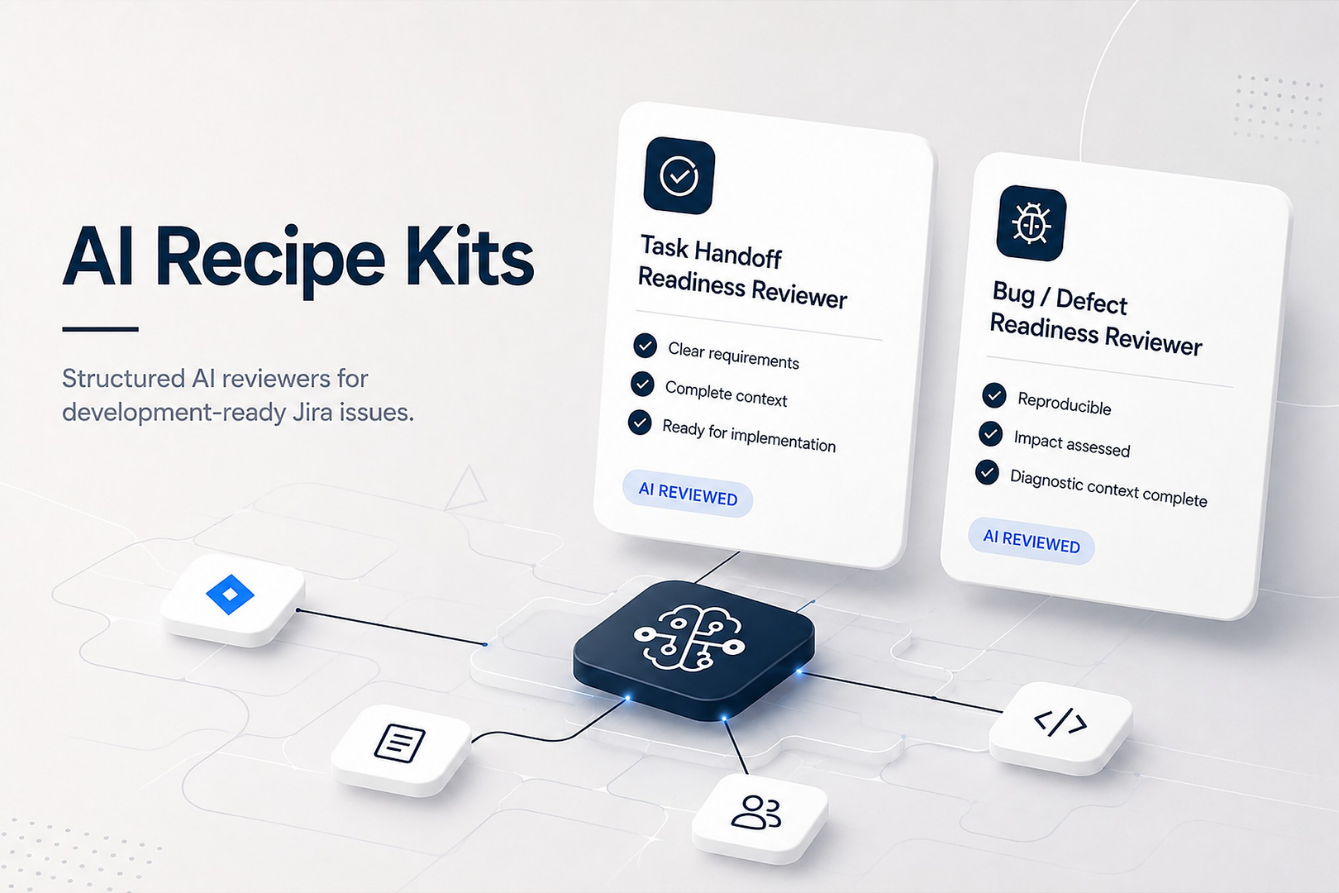
Wolt onboarding study
Completed as part of the Why Before UI design challenge, this independent case study explores how Wolt could improve onboarding and better handle unsupported areas to reduce drop-off and strengthen retention.
Wolt is a commerce and delivery platform designed to help people discover and order from restaurants, supermarkets, and other local retailers.
- 42% of new users uninstall within the first 3 minutes
- 75% of users abandon onboarding when told their area isn’t serviced
- Only 8% of users in unserved areas opt into email or push updates
- Reduce early uninstalls by 30%
- Double opt-in rates for waitlist or area alerts
- Managing expectations and improving communication about service availability could significantly increase retention
User Insights

|
“I went through all those steps and then found out they don’t even deliver to me.” | |
| “I would’ve stayed if I knew I’d be notified when they launch here.” |

|
|

|
“It felt like a waste of time. I deleted the app right away.” |
The Process
This process focused on understanding friction, prioritising the right opportunities, and shaping a solution worth validating.


I mapped the points where friction, uncertainty, and unmet expectations were weakening both the user experience and the business outcome.
I reviewed the existing flow to identify the moments where clarity, trust, and forward progress begin to break down.
I translated the strongest friction points into focused opportunities with the greatest potential to improve experience and retention.
I shaped a targeted solution and defined how its impact should be tested, measured, and refined.
Findings
I started by looking at where the experience was breaking down for both users and the business. The challenge pointed to two connected issues: high uninstall during onboarding, and low re-engagement when users discovered Wolt was not yet available in their area, suggesting that expectation-setting and service communication were major weak points in the first-time journey.
Onboarding flow
- Far too many steps, little information on proximity to completion or progress
- Misleading and inconsistent feedback during the set-up process - user told they are 'Done' three times, followed by more steps -
- After the e-mail verification
- After phone number code-confirmation
- At set-up completion
- Encouraging the user to leave the app before they have reached completion
- A list of cities, which gets harder to filter, the larger it grows with Wolt expanding further
- Lack of clarity on the user's intent- are they signing up to order right away, or are they expected to wait?
User Retention in Unserved Areas
- Lack of transparency and clarity of WHEN/IF the user’s area will be added
- Lack of information on WHY the user’s city isn’t served yet
- Lack of real incentive to wait (keep the app installed)
- Completing the set-up and onboarding, and finding out your city isn’t served yet is currently a ‘dead-end’ point of friction. - “I did all this just to be told Wolt does not deliver to me yet?”
Suggested Improvements
01. Improving clarity and removing unnecessary friction and loss of focus

02. Reassure Progress Without Signalling Completion
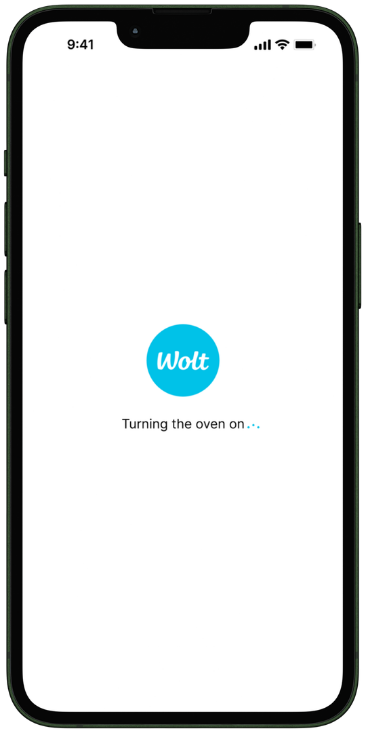
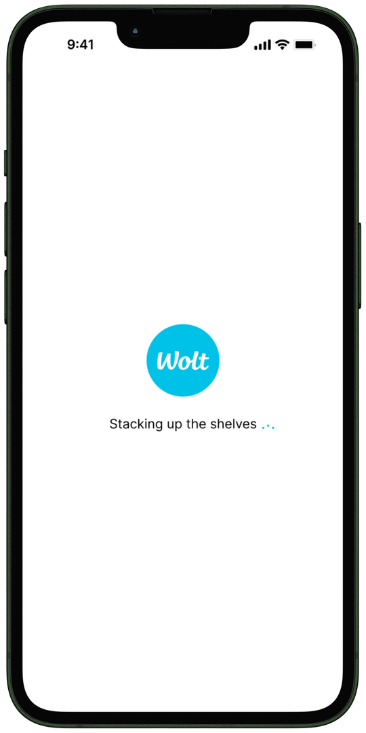
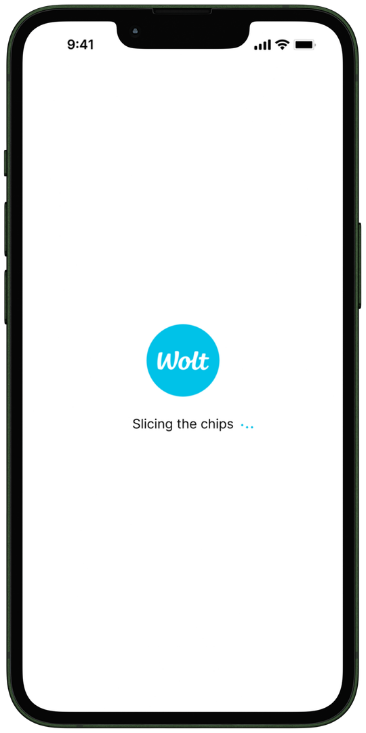
Progress Messaging to Sustain Momentum
Use a short in-progress message to reassure users that the system is working without implying completion too early. This creates clearer feedback, preserves momentum, and gives Wolt an opportunity to reinforce the value awaiting the user in a tone that feels consistent with the brand
03. From Rejection To Anticipation
This direction focuses on turning an unsupported-area message from a point of drop-off into a more intentional retention moment. Rather than ending the journey abruptly, it creates clearer expectations, preserves engagement, and gives users a reason to stay connected to the product.
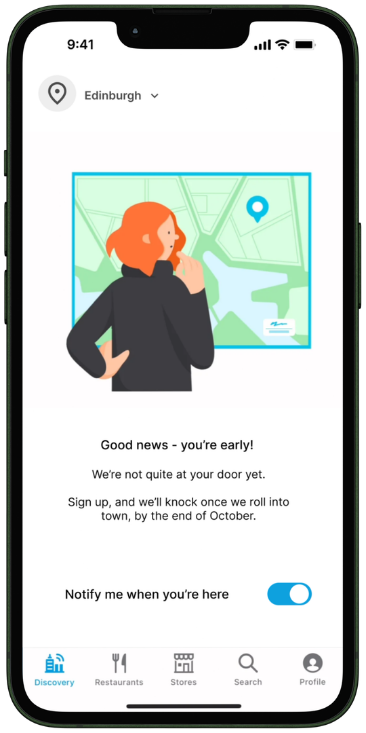
- Reframe the unsupported-area message with copy that builds anticipation instead of signalling a hard stop.
- Give users a way to register intent through a “Notify me when you’re here” opt-in.
- Keep the experience open by surfacing nearby cities and restaurant options they can still explore.
- Set clearer expectations with a rough availability estimate so users feel acknowledged rather than forgotten.
Further Improvements and Notes
01. Explain Why Service Is Not Available Yet
Rather than ending the journey with a generic unsupported-area message, the experience should provide clearer context on why the city is not yet live. Signals such as local restaurant readiness or user demand can make the delay feel more understandable and less arbitrary.
“47 people nearby have already signed up. A few more and we’re ready to go.”
02. Turn Waiting into Participation
Users should be given a meaningful role in the waiting period instead of being left at a dead end. Framing their presence as part of local momentum helps shift the experience from passive disappointment to active involvement.
e.g. A lightweight “Bring Wolt to your city” action that reinforces that demand is building, or the “Notify me when you launch here” opt-in that lets users actively register interest
03. Build Anticipation Through Visibility
Making local progress more visible can help create anticipation and a stronger emotional connection to the rollout. Showing signs of traction, nearby activity, or future readiness makes the product feel closer and more relevant, even before launch.
e.g. An interactive map showing nearby supported cities and where rollout may happen next.
04. Using the Dead End as a Retention Opportunity
The unsupported-area moment could function as a retention touchpoint rather than a drop-off point. By combining transparency, participation, and forward-looking messaging, the experience can preserve trust, encourage word of mouth, and give users a reason to stay engaged.
e.g. An incentive such as early access, a launch discount, or a welcome offer for users who stay opted in.
05. Incentivise Patience
Giving users a tangible benefit for staying opted in can make waiting feel more worthwhile and increase the perceived value of remaining connected to the product. This turns notification sign-up from a passive action into a more compelling exchange.
e.g. A launch reward unlocked only for users who opted in early.
06. Extend Value Beyond the Unsupported Area
Even if Wolt is not yet available in the user’s home city, the product can still create relevance by connecting to contexts where Wolt is already usable, such as travel. This helps reduce the sense of total inaccessibility and introduces a lighter engagement layer that keeps the brand present.
e.g. Travel-based collectibles or stamps for cities where the user orders while away from home or a map or in-app album that tracks visited cities and completed Wolt orders.
Defining Success
Conclusion
This direction shows how clearer onboarding and more thoughtful unsupported-area handling can reduce early drop-off, preserve trust, and strengthen retention from the first interaction. If you’re shaping products in delivery, local commerce, or other high-frequency consumer services, this is the kind of challenge worth exploring together.